Data centre map: every site with its power, grid and owner
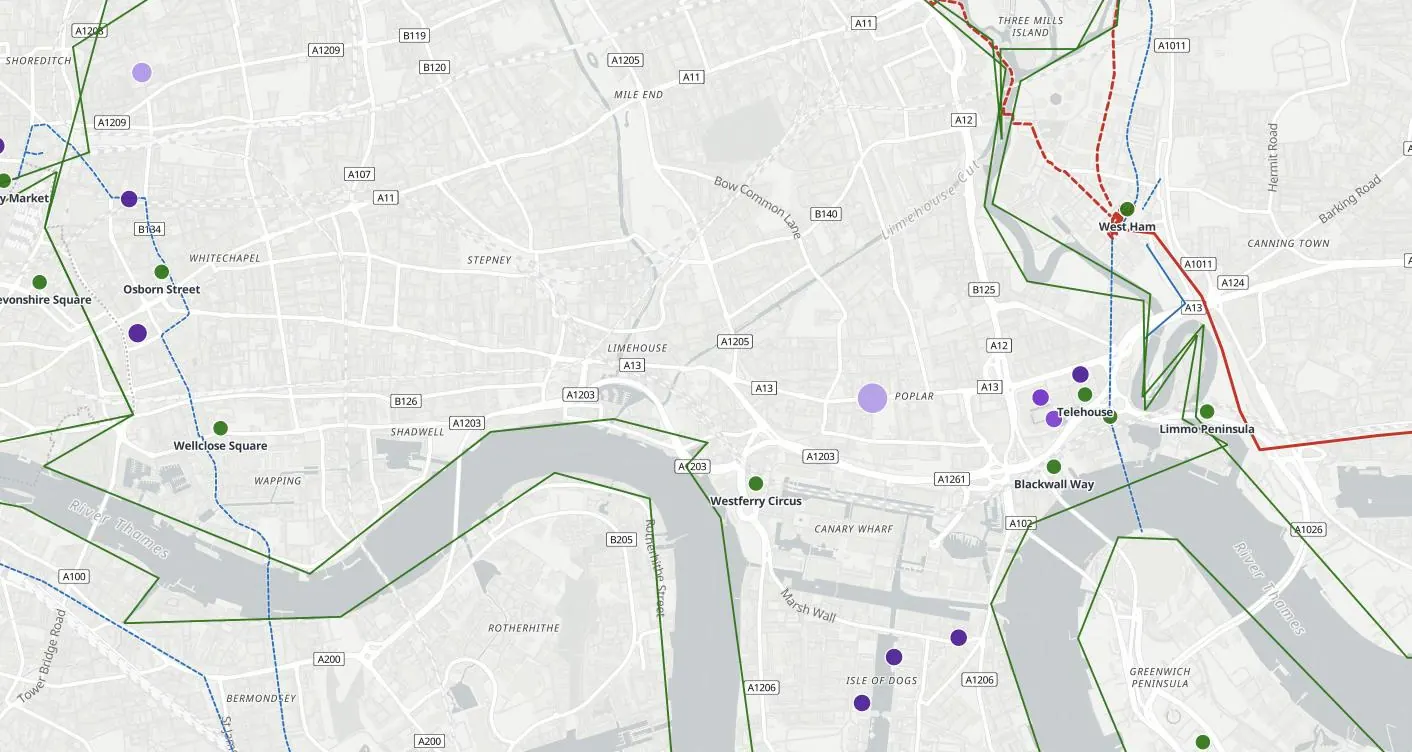
Sherpa Atlas maps data centres operating, under construction, permitted and planned, each with its operator, the capacity stated for it and its status, on the same map as the substations, power lines, plants and fibre around it. Whether you call it a data centre map or a data center map, the point is the same: see where capacity is being built and what the grid can still give.
What the map shows
Data centres, with everything that decides a project around them
Every stage
Operating, under construction, permitted, planned, announced, on hold and cancelled sites, coloured by stage.
Capacity as stated
The MW published for each site, and what it measures: IT load, total power or grid connection.
Who owns it
Operator, group and the investors, lenders and power buyers named for the site, each with the date it was reported.
What is around it
The nearest substations and their published grid status, power lines by voltage, plants, fibre, internet exchanges and district heating.
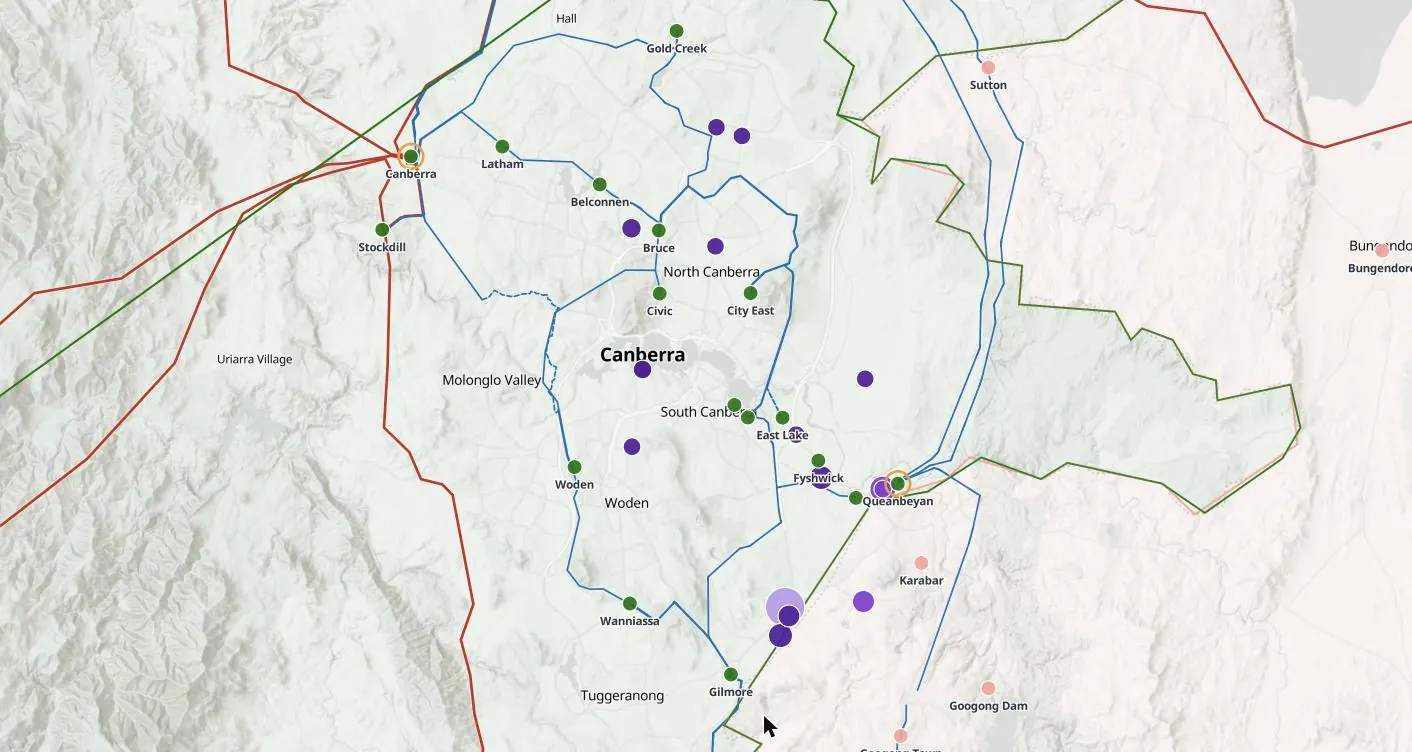
Open any dot
Every record with its sources and date
Each data centre record opens in full: status, capacity as stated, owners, the grid around it and every source, dated. Search any place, site, company or coordinates.
Who uses it
How teams use the data centre map
Data-centre developers and operators
Screen regions for power and land before committing to a site, compare clusters and see where competing campuses are already queued for the same grid.
Investors and lenders
Check a target’s competitive set, the stage of nearby projects and the grid constraints that could shift delivery dates before diligence starts.
Utilities and power producers
Find where new data-centre demand is concentrating to plan connections, PPAs, storage and new generation close to it.
Construction, engineering and equipment suppliers
Follow projects from planning to construction to time business development to the stage where equipment and contracts are decided.
Fibre and interconnection providers
See which campuses sit near internet exchanges and cable landings, and where new clusters will need routes.
Public agencies and economic development
Benchmark a territory against neighbouring regions on data-centre activity, grid capacity and supporting infrastructure.
Try it first
See it before you buy it
A free record
Click any dot on the map to open one record in full.
A free account
Three full records a day, and a demo area in full in every country edition.
A country in full
From $400 a month, first month half price. Cancel any time, or save with 6 months or a year. See prices →
Global Access
Every country and every layer, for one user, a team or an organisation, on request. Ask for access →
Questions
The data centre map: questions
What does the data centre map show?
Data centres operating, under construction, permitted, planned, announced, on hold and cancelled, with operator, stated capacity and status, on one map with substations, power lines, plants, fibre and district heating.
Is the capacity figure IT load or power?
Each site shows the figure as published and says what it measures: IT load, total power or grid connection. Figures with different meanings are never added together.
Where does the data come from?
Every record carries its sources and the date it was last checked: grid operators, regulators and governments, planning authorities, company announcements and the press. Nothing is estimated where a figure has been published; where no figure is published, the record says so.
Is it free?
Click any dot for one full record, free. A free account opens three full records a day and a demo area in full in every country edition. A country in full is from $400 a month, first month half price; Global Access to every country and layer, for one user, a team or an organisation, is on request.
The data centre map by country
- Data Centre Map of Norway
- Data Centre Map of Sweden
- Data Centre Map of Denmark
- Data Centre Map of Finland
- Data Centre Map of Italy
- Data Centre Map of Germany
- Data Centre Map of Benelux
- Data Centre Map of France
- Data Centre Map of Great Britain
- Data Centre Map of Australia
- Data Centre Map of Tokyo
- Data Centre Map of South Korea